
Down A Rabbit Hole Blog
Exploring a different world of music every three weeks
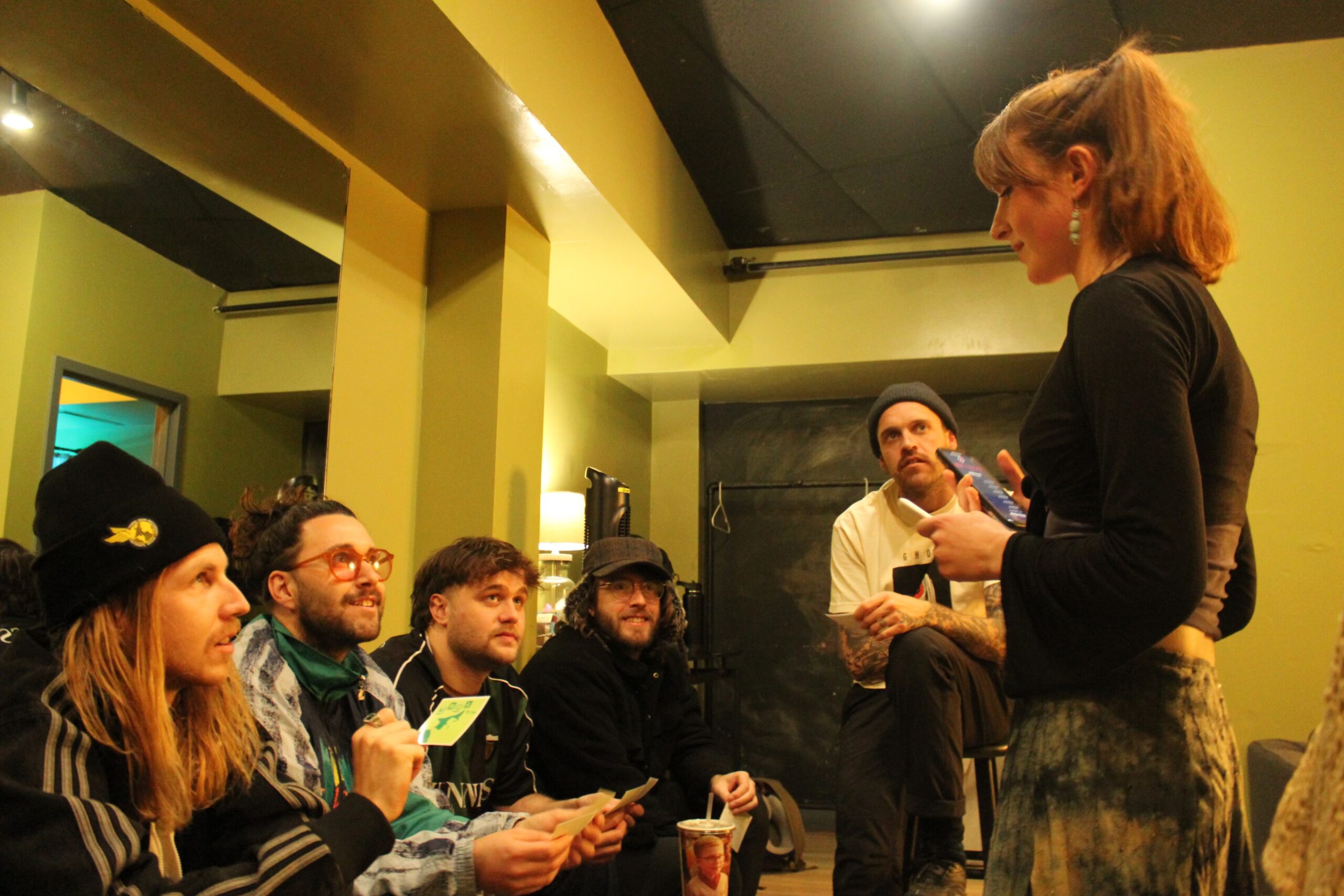
Our Crazy Trip with the Psychedelic Porn Crumpets
The Psychedelic Porn Crumpets stopped in Boston during their North American tour, where I interviewed the band about their recent albums, artistic inspirations, and life in Perth, Australia.
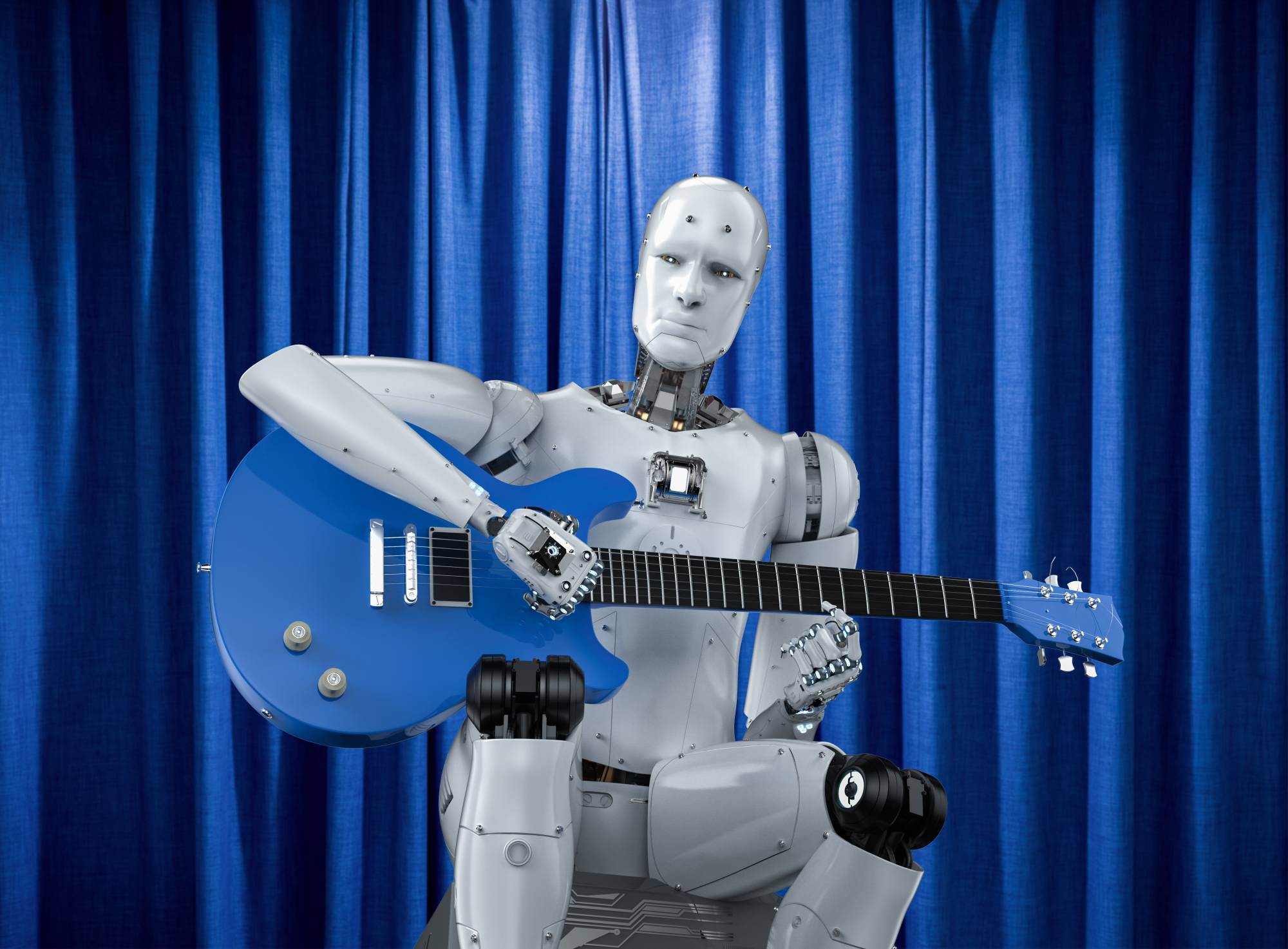
The Rise of AI
in the music Industry
Examining the rapid rise of AI-generated music, this memo breaks down what it means for artists, record labels, and listeners as the industry continues to evolve.

Upcoming article:
Riot Grrl
Learn more about the Riot Grrrl movement in this upcoming article, which covers the history of the genre and features recommended tracks, an interview, and my Riot Grrrl concert experience.
The Rise of AI in the Music Industry
MEMORANDUM
To: [Removed]
From: Julie Evers
Date: November 3, 2025
Subject: The Rise of AI in the Music Industry
INTRODUCTION
This past summer, indie-folk band The Velvet Sundown shot into the limelight after they released three albums and garnered over 1 million streams on Spotify. Their dreamlike, nostalgic sound was reminiscent of 1970s soft rock bands such as Crosby, Stills, Nash & Young and Kansas, appealing to a wide audience. After gaining media attention, the band announced that they were a “synthetic music project,” meaning that both the members and their music were created with artificial intelligence. This announcement ignited ongoing conversations regarding the authenticity and transparency of AI-generated music.
The Velvet Sundown is one of many recent cases that illustrate the rapid rise of AI-generated music and its growing adoption into mainstream music. The purpose of this memo is to provide an overview of this trend as it reshapes the music industry so that Iodine Recordings can better adapt to growing changes. I will define AI-generated music, outline its development, highlight its effects on the industry, include public and professional opinions, and suggest possible responses our label can consider.
OVERVIEW
Definition of AI-Generated Music
AI-generated music refers to music that is created using artificial intelligence technologies, such as machine learning and deep learning. Machine learning is a type of artificial intelligence that learns from data and improves over time, while deep learning is a subset of machine learning that uses artificial neural networks to imitate the human brain’s functions. In regards to music creation, these systems analyze pre-existing songs to learn patterns, rhythms, melodies and styles to use in their generated compositions.
Beyond music creation, AI is also affecting how music is becoming distributed, marketed, and recommended to listeners. Throughout this past year, AI-powered agents have begun to play a larger role, allowing AI models to autonomously write, perform, and release music.
Developments of AI-Generated Music
In 2016, Sony’s Flow Machines, an AI-assisted music production project, created the first pop song composed by artificial intelligence, called “Daddy’s Car.” Since then, machine-made music has advanced rapidly, creating sounds that are increasingly indistinguishable from human-created music, as seen in The Velvet Sundown example. In 2024 a TikTok user produced a song called “Heart On My Sleeve” under the musicians’ names Drake and The Weekend without receiving consent. Many listeners believed that the song was an authentic release, further illustrating the impressive sound quality of machine-made songs, as well as issues surrounding authenticity and copy-rights.
Despite controversies, it is undeniable that AI’s role in the music industry is growing. Even mainstream artists are beginning to adopt these technologies. This past year, The Beatles won a Grammy for “Now and Then,” which used AI to restore John Lennon’s vocals, highlighting the growing acceptance of these technologies in the music industry. The market research store Research and Markets projects that the global market for generative AI in 2024 was $642.8 million and will grow to $3 billion by 2030 at a CAGR rate of 29.5% (see Appendix A).
PARTICIPANTS AFFECTED
Musicians
Josh Antonuccio, media arts professor at Ohio University and a leader of AI in the music industry, believes that the emergence of AI in music creation should be treated as an addition to a musicians toolkit, stating “[T]he technology of the last 100 years in particular has enabled artists to achieve extraordinary creative feats. AI is now a part of that continuum, albeit with a much more powerful toolset.” As such, AI can be compared as a much more impactful version of the introduction of drum machines in the 1980s that threatened the use of professional drummers. These drum machines became a widely used tool by musicians and made music creation more accessible to those that lacked access to drums or a drummer. This showcases the democratizing effect of technology, opening the door of music creation to a host of creatives that lack musical training. For instance, British musician immoliver claims to have no musical background and yet was signed to the record label Hallwood Media after receiving 3 million streams on one of his AI-generated songs.
Others within the music industry disagree, viewing AI as a threat to the innovation and authenticity of human-made music. This negative outlook is fueled by the fact that many AI models are trained on datasets containing unlicensed music, violating the copyrights of millions of artists. Human musicians are not credited or paid royalties for the use of their work, raising ethical concerns about the creation of AI-generated music. Furthermore, platforms like Spotify are increasingly relying on synthetic songs to cut costs, threatening the livelihoods of musicians and the creative economy.
Record Labels
Record labels have been advocating for stricter copyright laws to protect their musicians from exploitation, with the world’s largest music groups, Universal Music Group, Warner Music Group, and Sony Music Entertainment, suing AI companies. Simultaneously, these music groups are partnering with Spotify to develop AI tools that respect the copyrights of artists. While Spotify has not yet detailed what these tools will look like, the collaboration highlights the industry’s growing investment in using this technology ethically and responsibly. CEO Robert Kyncl eloquently described this effort by stating, “You have to embrace technology, because it’s not like you can put technology in a bottle. The genie is not going back.”
Music Listeners
It is currently not mandatory for creators of AI-generated music to announce itself as such. This causes distrust amongst listeners who are unsure if the music they are listening to is created by a human or a machine. While some music listeners care greatly about how their music is created, Forbes found evidence that music fans don’t care “if their favorite artist is an algorithm—as long as the music resonates.” After the “Heart On My Sleeve” controversy, the New York Times collected opinions of high schoolers. An opinion from student Sofia G. supports Forbes’ finding as she stated that she “…would 100% listen to a song if [she] knew if it was sung by a machine.”
Music listeners will also be affected by the overabundance of music on streaming platforms due to AI-generated music. There are roughly 100,000 to 150,000 songs already being released to streaming services every day, and these numbers will only increase with the addition of machine-made music, making it hard for listeners to weed through mediocre music. Antonuccio warns that “We are facing a tsunami of AI-generated songs from amateur musicians to major artists in the years to come.”
RELEVANCE AND POSSIBLE RESPONSES
According to WIPO, 54,000 AI-related inventions were patented between 2014 and 2023, with 13,480 of those inventions being related to speech and music. This rise in AI patents reflects the growing involvement of AI in our world, particularly within music. If Iodine fails to adapt it faces the risk of becoming extinct, similar to Blockbuster in the age of streaming. At the same time, Iodine must consider the importance of protecting human musicians and addressing whether machine-made music can mimic human emotions. Finding a balance between innovation and ethical use is of utmost importance. To navigate in the age of AI, our label can consider the following responses:
Establish Ethical AI Partnerships
Collaborate with AI companies that use licensed datasets to ensure musicians’ work is protected and fairly compensated.
Encourage Musicians to Use AI as a Tool and Create a Transparency Policy
Support artists in using AI responsibly while requiring clear disclosure when AI tools are used in music creation to maintain listener trust and a reputation of authenticity.
Monitor Legal Developments
Advocate for fair compensation and credit for musicians whose work trains AI models and stays up-to-date with copyright legislation to ensure that we comply.
Use AI for Marketing Support
Leverage AI for audience analysis, trend tracking, and promotion to enhance human musicians’ visibility rather than replace them.
CONCLUSION
The growth of AI in the music industry presents both challenges and opportunities for human artists, record labels, and music listeners alike. It is important for us as an independent record label to be aware of the positives and negatives associated with AI-generated music and tools so we can best navigate this rapidly changing landscape. Despite the role of AI in the music industry remaining unclear as we continue to develop, the first step in navigating these changes is by educating ourselves on the trend. Thank you for taking the time to read this memo and if you have any questions please reach out.
BIBLIOGRAPHY
“AI can score our every moment and mood. Should musicians be worried?” NPR.com. February 21, 2025. https://www.npr.org/transcripts/g-s1-50012, accessed October 2025.
Bakare, Lanre. “An AI-generated band got 1m plays on Spotify. Now music insiders say listeners should be warned.” TheGuardian.com. July 14, 2025. https://www.theguardian.com/technology/2025/jul/14/an-ai-generated-band-got-1m-plays-on-spotify-now-music-insiders-say-listeners-should-be-warned, accessed October 2025.
Berger, Virginie. “AI’s Impact On Music In 2025: Licensing, Creativity And Industry Survival.” Forbes.com. January 3, 2025. https://www.forbes.com/sites/virginieberger/2024/12/30/ais-impact-on-music-in-2025-licensing-creativity-and-industry-survival/, accessed October 2025.
Chan, Kelvin. “The success of AI music creators sparks a debate on the future of the music industry.” APNews.com. August 31, 2025. https://apnews.com/article/artificial-intelligence-ai-music-suno-udio-551308748c84c774c3c5ecd89aa93904, accessed October 2025.
“Generative Artificial Intelligence in Music – Global Strategic Business Report.” ResearchAnd Markets.com. October 2025. https://www.researchandmarkets.com/reports/6042893/generative-artificial-intelligence-in-music, accessed October 2025.
The Learning Network. “What Students Are Saying About A.I.-Generated Music.” NewYorkTimes.com. May 11, 2023. https://www.nytimes.com/2023/05/11/learning/what-students-are-saying-about-ai-generated-music.html, accessed October 2025.
Martinez Jr, Alberto. “The Rise of AI-Generated Music: What It Means for Artists.” FlourishProsper.net. January 4, 2024. https://flourishprosper.net/music-resources/the-rise-of-ai-generated-music-what-it-means-for-artists/, accessed October 2025.
Peoples, Glenn. “Warner Music Group CEO Robert Kyncl on the Inevitability of AI: ‘The Genie Is Not Going Back.” Billboard.com. September 27, 2023. https://www.billboard.com/pro/warner-music-group-ceo-robert-kyncl-ai-code-conference/, accessed October 2025.
Rahman-Jones, Imran. “Spotify working on AI music tools with major record labels.” BBC.com. January 16, 2025. https://www.bbc.com/news/articles/cn7emv83edjo, accessed October 2025.
Rechardt, Lauri. “IFPI looks at a decade of digital transformation in the music industry.” WIPO.int. April 23, 2023. https://www.wipo.int/en/web/wipo-magazine/articles/ifpi-looks-at-a-decade-of-digital-transformation-in-the-music-industry-73661, accessed October 2025.
Semancik, Alex. “How AI is transforming the creative economy and music industry.” Ohio.edu. January 2, 2024/February 4, 2025. https://www.ohio.edu/news/2024/04/how-ai-transforming-creative-economy-music-industry, accessed October 2025.
APPENDIX A
Generative Artificial Intelligence (AI) in Music Market
Source:
“Generative Artificial Intelligence in Music – Global Strategic Business Report.” ResearchAnd Markets.com. October 2025. https://www.researchandmarkets.com/reports/6042893/generative-artificial-intelligence-in-music, accessed October 2025.